Research
Growing up in Montreal, I was surrounded by many large parks and urban forests, finding it surreal (and I still do) that such spaces could co-exist with the built environment in the ‘big city.’ However, I also saw many underused spaces (primarily abandoned parking lots) topped with concrete, that were the same size of the parks I very much enjoyed. I dreamt about the potential that these spaces could be and how a simple change of land-use would drastically change my neighbourhood for the better. As I entered higher education, biology and geography classes made me want to venture even further into this curiosity I had when I was younger, and found urban ecology and planning as the two focal points of my interests.
It goes without saying that urban ecology and city planning are two very inter-disciplinary fields. Currently, my research spans across ecology, urban planning, and political science, all linked by their intrinsic influence on, and by, the community they engage with.
Ongoing Research
Meta-analysis on the Cooling Effect of Green Roofs, 2022-
CSEE/CBA 2023 Lightning Talk Presentation
Abstract: The urban heat island effect is a major sustainability challenge for cities. Trees or large green spaces are effective at reducing local temperatures, but in densely built areas, green roofs are often encouraged as an alternative. This potential for urban heat island mitigation is a strong motivator for integration of green roofs into planning and policy. However, research that rigorously assesses cooling effects of green roofs is lacking relative to other types of green infrastructure. We will share results of a meta-analysis assessing the magnitude of temperature reduction provided by green roofs, including factors that contribute (or detract) from their success.
Part of an NSERC CREATE program: DesignLIFES (Design of Living Infrastructure for Ecosystem Services). Under the supervision of Dr. Carly Ziter in the Department of Biology at Concordia University, Montreal.
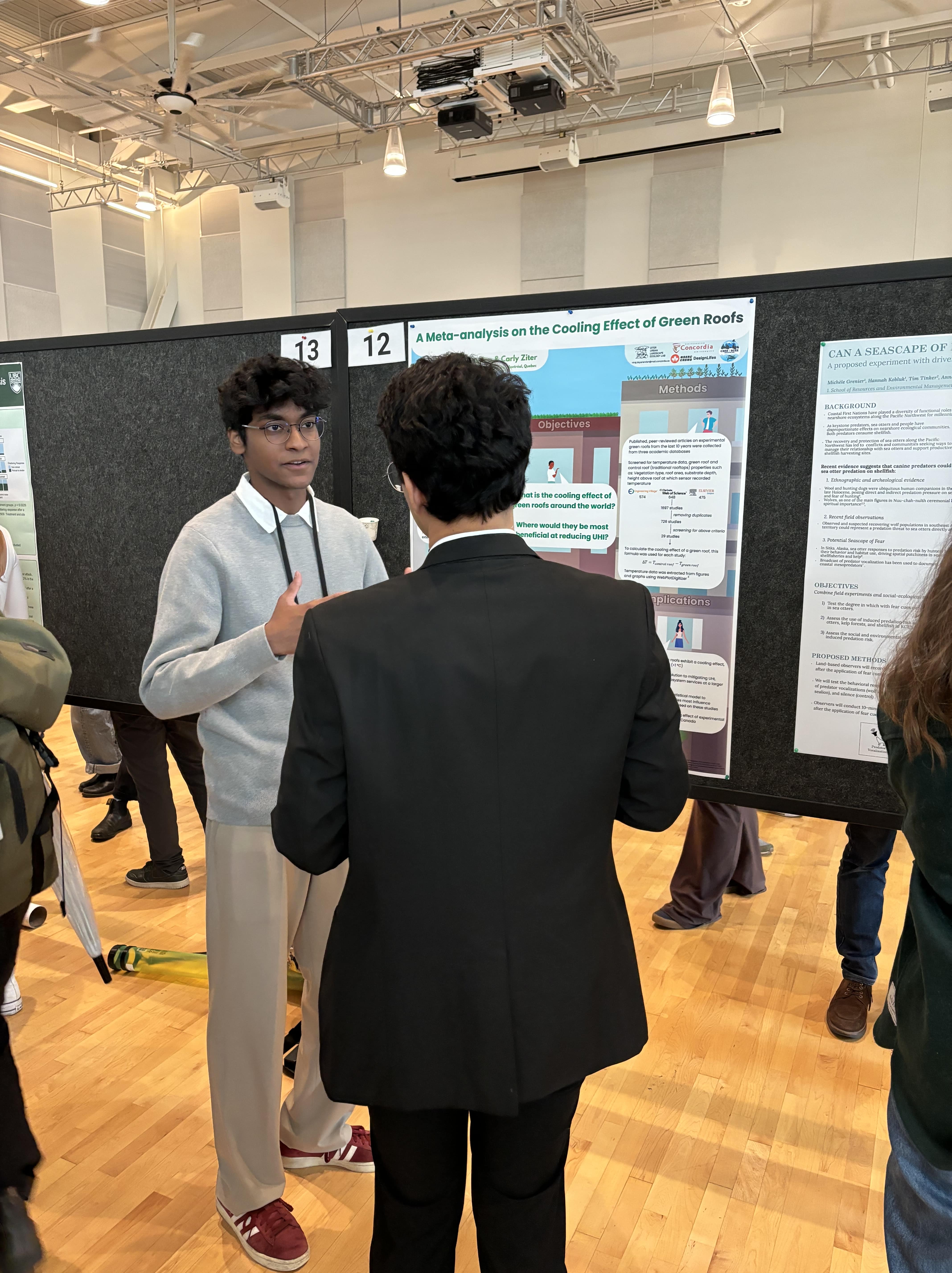

Left: Poster presentation at CSEE 2024 Right: Lightning talk at DesignLIFES 2024 Symposium
Past Research
Understanding Stocks and Flows of Urban Wood Waste to Inform Climate Change Mitigation Strategies for Cities, 2024-2025
Awarded a 2024 NSERC Undergraduate Student Research Award (USRA), under the supervision of Dr. Carly Ziter in the Department of Biology at Concordia University, Montreal.
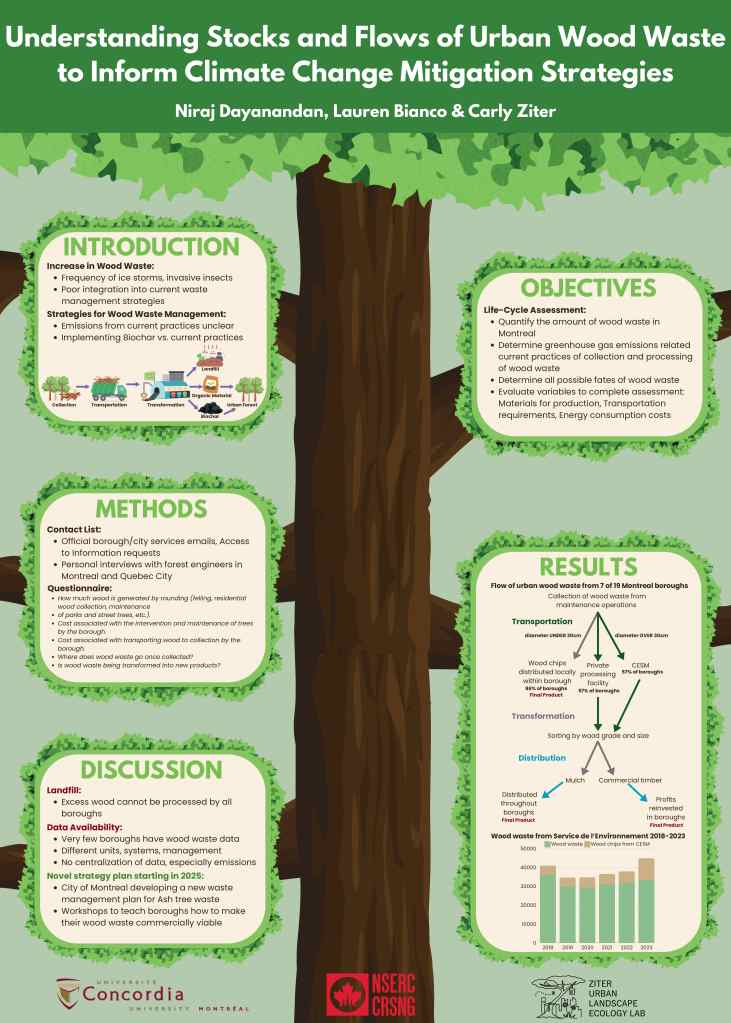
Poster presented at Concordia University Research Day (October 2024)
Paving over potential? Evaluating the effect of freeways and transit-oriented growth in Vancouver, Canada, 2024-2025
Abstract: This thesis explores the relationship between transit-oriented development and freeway infrastructure in Vancouver from 2001-2021. We employed a correlation analysis to assess how population and employment density, transit frequency, and proximity to urban centres and to freeways all relate to each other. Moreover, we created a standardized metric titled Combined Density-Transit Frequency Index (CDTFI) to evaluate catchment areas around SkyTrain stations throughout the study period. Contrary to prior research, our findings reveal that transit frequency is not always an indicator of increasing densities in transit-oriented development areas (R^2 = -0.62). Throughout the study period, we measured significant correlations between transit frequency and employment density (R^2 = 0.64); population density and distance to the nearest interchange (R^2 = 0.52); employment density and distance to the nearest interchange (R^2 = -0.46); and distances to interchanges and distances to urban centres (R^2 = -0.50). The CDTFI metric illustrated a generally well-served SkyTrain network regarding supply and demand of transit, however, few stations showed drastic increases and decreases that were not explained by proximity to freeways. Further sample sizes are needed to find conclusive evidence of the CDTFI indicating proximity to freeways. However, both the correlation analysis and metric are useful and accessible data-driven tools for evaluating past, present, and future TOD areas. This paper offers a simplified approach to understanding the complicated relationship between land-use and the built environment. Under the supervision of Dr. Craig Townsend in the Department of Geography, Planning & Environment at Concordia University, Montreal.


Left: Final presentation for Honours seminar (April 2025) Right: Map of Metro Vancouver with SkyTrain TOD areas, planned urban centres, and highway interchanges
Foliage and Fortune: An Analysis of Urban Forest Resilience and Accessibility, 2024-2025
Completed as part of a semester-long independent research project, I compared species diversity and the abundance of cultivar species across census tracts and contrast percentage canopy cover and percentage of census tracts in proximity to green spaces. This project outlined the effects of policy frameworks such as the 10-20-30 and 3-30-300 rules in urban forestry, and highlighted potential gaps in ecosystem service provision and forest resilience for vulnerable populations. My findings validated prior research by illustrating a positive relationship between canopy cover and median income. However, I found a slightly negative correlation between species diversity and median income, while also determining no correlation between percentage abundance of cultivars and median income. I also uncovered a high percentage of residences in the lower income brackets with larger inaccessibility to green spaces as noted in the ‘300’ of the 3-30-300 rule. However, the study was limited to data availability, and demonstrates the need for public tree inventories to be more comprehensive, especially in marginalized communities. Presented at the In.Site2 and Sustainability across Disciplines, where it was awarded the top undergraduate presentation. Conducted under the supervision of Dr. Rebecca Tittler in the Department of Biology at Concordia University, Montreal.
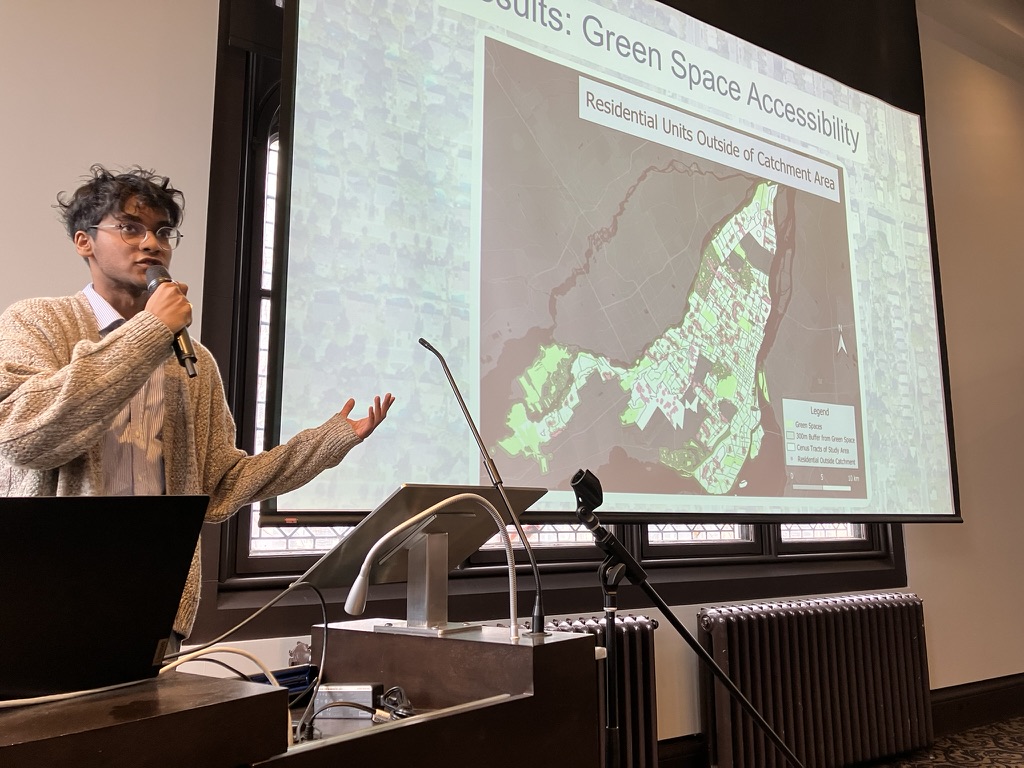
Presentation at the In.Site2 and Sustainability across Disciplines (March 2025)
Design Brief: Planning Report Conducted on Mercier-Est, 2023-2024
The final project of the Advanced Urban Laboratory, this design brief involved extensive preliminary research and proposed initiatives to the neighbourhood of Mercier-Est, located in the east of Montreal. Our team focused on using existing and proposed green spaces to reinforce connectivity and place-making between different perspective scales of the study site, emphasizing on connections within and at the edge. Existing and proposed transportation networks such as a tram-train, protected bike lanes, and pedestrianized streets were used to alleviate the long-lasting consequences of automobile-led development. Under the supervision of Dr. Pierre Gauthier in the Department of Geography, Planning & Environment at Concordia University, Montreal.
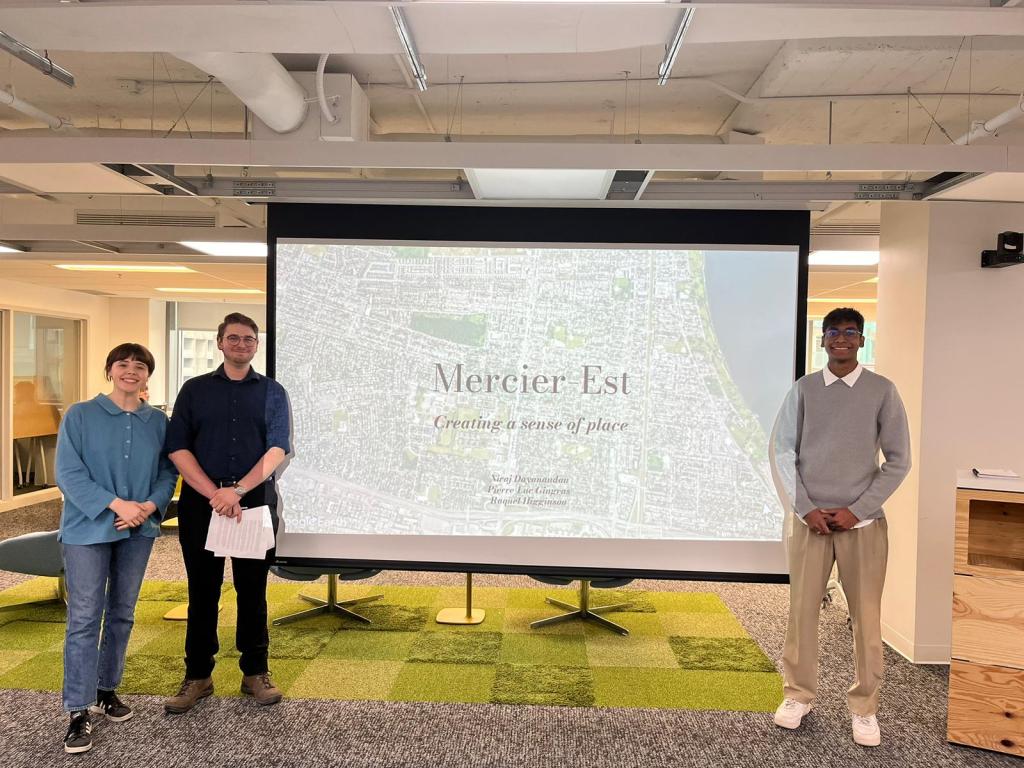
The final presentation to community members, planning professionals, and faculty (Pictured from left to right: Raquel Higginson, Pierre-Luc Gingras, Niraj Dayanandan, April 2024)
Saint-Jacques Escarpment Informal Green Space Historical Overview, 2022-2023
Authored a comprehensive background document on the Saint-Jacques Escarpment in Montreal. This park was long considered an informal green space that was void of any formal recognition or environmental protection from local government but was informally maintained by members of the neighbouring communities. This paper covers the history of the escarpment from the settlement of the Sulpicians in the 18th century to present day, and addresses the tireless efforts of community groups to gain protection and recognition of this green space, and the impact of changing city and provincial governments on the effort. Part of a larger project: “Enhancing biodiversity, social inclusion, and climate resilience through informal urban green spaces,” under the supervision of Dr. Amy Poteete in the Department of Political Science at Concordia University, Montreal.
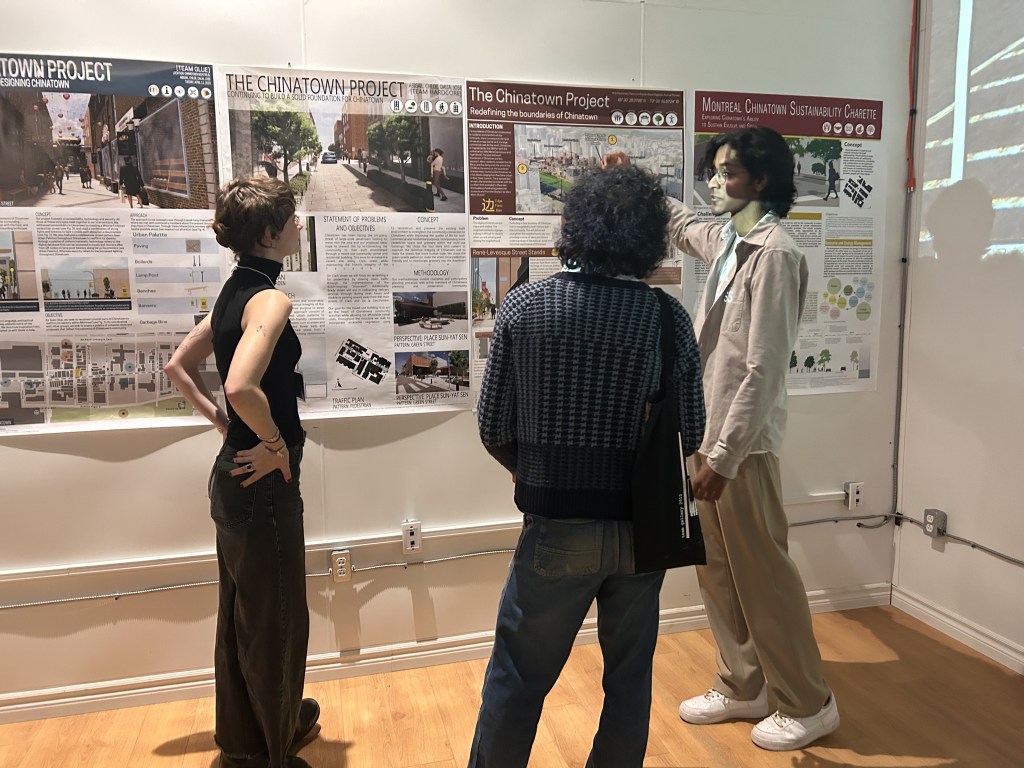
Reimagine Chinatown Design Charette and Forum, 2022-2023
Starting as a design charette in the Urban Laboratory class that involved many iterations of intense group work, this project’s overall goal was to use material and community planning practices to aid the local community groups of Montreal’s Chinatown. Cultural and heritage protection are the heart of the project, and addressing issues such as sustainability and food security are constant themes while also implementing physical manifestations such as community markets and garden initiatives. In September 2023, the design charette merged as part of the Chinatown Reimagined Forum by the JIA Foundation and the presentations were made available to a broader public audience and the Montreal Chinatown community. Under the supervision of Dr. Silvano De la Llata in the Department of Geography, Planning & Environment at Concordia University, Montreal.

Supported by




 Niraj Dayanandan